

21 Jul What Is Generational Trauma? How Family Patterns Pass Down
Have you ever reacted to something and thought, where did that come from? Perhaps a wave of sadness that does not match your life, a fear of scarcity even though you have enough, or a pattern in relationships that repeats no matter how hard you try to break it.
Generational trauma is a warning from the generations before us. But it is also a love language. When we follow that pain, we are saying to those who came before: because you suffered, out of love for you, I will suffer too.
In family constellation work we often find that these feelings did not start with you. They started generations ago, and they were passed down like an invisible inheritance.
What is generational trauma?
Generational trauma is emotional pain that originated in a previous generation but continues to influence the ones that follow. It is also called intergenerational trauma, transgenerational trauma, inherited trauma or ancestral trauma. The words differ, the thing they describe does not.
A war, a sudden death, an emigration, a bankruptcy, a child given away, a secret nobody was allowed to mention. Events like these leave a mark on a family system.
The people who lived through them often could not process what happened. Survival came first. So the grief, fear or guilt was pushed down, and what is pushed down does not disappear. It moves quietly through the family, looking for somewhere to land. Often it lands on a child, a grandchild, or even a great-grandchild.
It reaches us in much the same way as the colour of our eyes, the colour of our hair, our manner of speech, our tone of voice, even the way we walk. All of it travels down the family line, and so does the trauma.
How is generational trauma passed down?
There are two useful ways to look at this. The first is scientific. Research in epigenetics suggests that severe stress can influence how genes are expressed, and that some of these changes may be passed on. Studies of descendants of famine survivors and war survivors point in this direction, including research on Holocaust survivors and their children which found the same gene showing altered methylation in both parent and offspring. The science is still young, but it takes seriously what many families have always sensed: what happened to our grandparents did not stay with our grandparents.
The second way is systemic, and this is the heart of family constellation therapy. Every family is a system with its own hidden loyalties. Children are born loving their parents and their family, and out of that love they will unconsciously carry what an earlier generation could not. A daughter may live out her grandmother’s unlived grief. A son may feel a strange guilt that actually belongs to a great uncle nobody talks about.
Bert Hellinger, who developed this work, called these hidden loyalties entanglements. We become entangled when we unknowingly take on a fate that is not ours. It is an act of love, but a blind one, because carrying someone else’s pain does not free them. It only doubles the weight.

Is generational trauma real?
This question has baffled scientists and geneticists for a very long time. There was always a suspicion that trauma could be carried into the next generation, but for decades there was nothing solid to point to. That has changed. Research now increasingly supports what families have always sensed, that what happened to those who came before us does not simply stop with them.
It is worth saying plainly that passing trauma on is never a choice. No parent wants to hand their pain to a child. It happens because a system that lived through something dangerous learned from it, and holding on to that lesson felt safer than letting it go.
Think about someone who is frightened of snakes but has never encountered one in their life. Put a piece of string of exactly the same size on the floor and they will step over it without a thought. Show them a snake and they jump before they have had time to think. That reaction did not come from their own experience. It came down the line, from somewhere in the ancestry where something happened, and the body has been carrying the warning ever since.
That is a reflex doing its job. It is protection, not damage.
The problem is when we inherit something that no longer serves us, and when we do not understand what we are carrying.
This is why people sometimes feel terrible without being able to explain why. You may have spent years in therapy. You may have done real, serious work on yourself. And still something has shifted only marginally, and still something does not add up. That is very often when generational trauma is at play. Each of us is carrying at least something from the generations behind us.
And it is not only the trauma that travels, it is also the pain, because pain has a very interesting energy about it, and the only way to deal with pain is to metabolise it, which means actually feeling it. But many of our ancestors did not have the tools, or the courage, or even the understanding that this is what they had to do, so it was easier to wipe the pain under the carpet and look elsewhere, because facing it might have been overbearing. And because of that, somewhere down the line a child is born who is carrying this pain without even cognitively knowing that the pain is there.
We are maybe the first generations who have the privilege of being able to deal with these transgenerational pains, with the help of systemic family constellation work, which is giving a voice to those unknown entanglements.
And the wonderful thing about this is that in constellation work this is not shamanic work, and it is not some woo-woo work either, the pain comes because our body, which carries that pain, talks to us very clearly about it, and it is unmistakable. No special skills needed, no experience needed, anyone can be part of this work.
And although it is not in our power to change what the future generations will be carrying, very often when we work on the pain we are carrying from the past, or even on our own pain, as a positive side effect the generations after us will in many cases be freed from that pain, and those traumas, and those entanglements.
We are the bridge between the past, the present and the future. And healing ourselves and our ancestral traumas should not only stop with us. We have a greater responsibility than that.
What does generational trauma look like? A real example
I worked with a client whose ancestor was murdered on a train journey. He had sold livestock at market and was travelling home carrying the money. He was robbed and killed for it.
Ever since, that family system has sabotaged its own success with money. Every generation. Money arrives and it is gone almost immediately, spent or lost or given away. Nobody in the family could explain why.
What had been passed down was a simple, silent equation. Money and success mean death. Getting rid of it quickly was the safest thing to do.
That is a perfect example of inherited trauma that no longer serves anyone. The danger ended generations ago. The protection did not.
Do I have generational trauma?
Generational trauma rarely announces itself. It tends to show up as patterns that do not quite make sense, for example:
- Feelings that seem bigger than your life. Deep sadness, anxiety or anger that has no obvious source in your own story.
- Repeating family patterns. Divorces at the same age, accidents, addictions, financial collapse, or illness appearing generation after generation.
- A sense of not belonging. Feeling like an outsider in your own family, or feeling responsible for everyone around you.
- Blocked success or self sabotage. Things fall apart just when life starts going well, as if doing better than those who came before you were somehow not allowed.
One of these on its own proves nothing, of course. But when several show up together, and when talking therapy alone has not shifted them, it is worth looking at the family system as a whole.
What family constellation work reveals
In a constellation, the hidden structure of your family system is brought into the open. In a group setting, representatives stand in for members of your family. In an individual session, we use markers or figures instead. Either way, something remarkable happens: the dynamics that have been operating in the dark become visible.
You might see, for the first time, that your anxiety stands beside your grandfather who never spoke about the war. Or that your difficulty receiving love is connected to a mother whose own mother died young. These moments of recognition can be quietly life changing, because you finally understand that you were never broken. You were loyal.
How do you heal generational trauma?
Yes, it can be healed, and the healing movement is often simpler than people expect. Constellation work does not ask you to relive the original trauma or to blame anyone. Instead, it restores order in the system. The pain is acknowledged and returned, with respect, to where it belongs. The excluded are given a place again. And you are freed to receive life from your ancestors without also taking their burdens.
Many people describe a physical sense of lightness afterwards, as if something they had carried for decades was finally set down. The patterns do not vanish overnight, but their grip loosens, and new choices become possible.
A gentle first step
You do not need to know your full family history to begin. The system reveals what needs to be seen. If this article stirred something in you, that stirring is worth listening to.
There are two ways to begin. You can join a family constellation workshop in London and experience this work in a group, where representatives stand in for members of your family and the whole picture appears in the room. Or you can book a one-to-one session, in person or online, and do the work privately.
Many people do both. They start with a one-to-one session, and once it stops feeling daunting they come to a workshop and sit as a representative for somebody else.
Whatever your ancestors lived through, their story does not have to be your destiny.
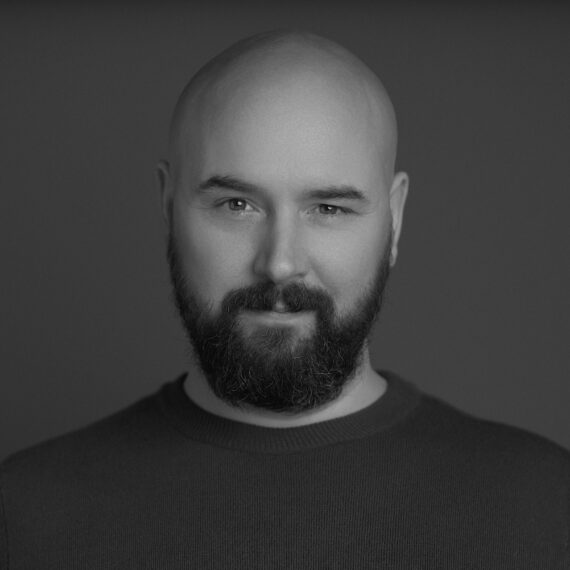
Ivo U. Aulik
Certified Systemic Family Constellation Facilitator
Although Ivo’s journey started in 2015 with studies in psychology at UCL, his four years of training with the Centre for Systemic Constellations was the pillar of his education in systemic family constellation therapy. Ivo has been practising since 2021, with hundreds of clients including A-list celebrities, CEOs of some of the largest companies in the world, and many well-known politicians. However, status means nothing in this work, and every client is treated exactly the same.
Sorry, the comment form is closed at this time.