

29 Jul Can Family Constellation Therapy Help with Grief?
Grief is one of the few experiences almost nobody escapes, and yet most of us are given very little help in learning how to carry it. We are told time heals. We are told to stay strong. We go back to work after a fortnight and we get on with things. And then, sometimes years later, something small opens the whole thing up again.
People often come to family constellation therapy when the ordinary route has not quite worked. They have talked about the loss. They understand it. They can explain it clearly. But something in them still has not been able to put it down.
Grief is not a problem to be solved
The first thing worth saying is that grief is not a disorder. It is love with nowhere to go. The NHS describes grief as a natural response to loss that can affect people physically as well as emotionally, and it makes clear there is no single correct way to move through it (NHS guidance on grief after bereavement or loss).
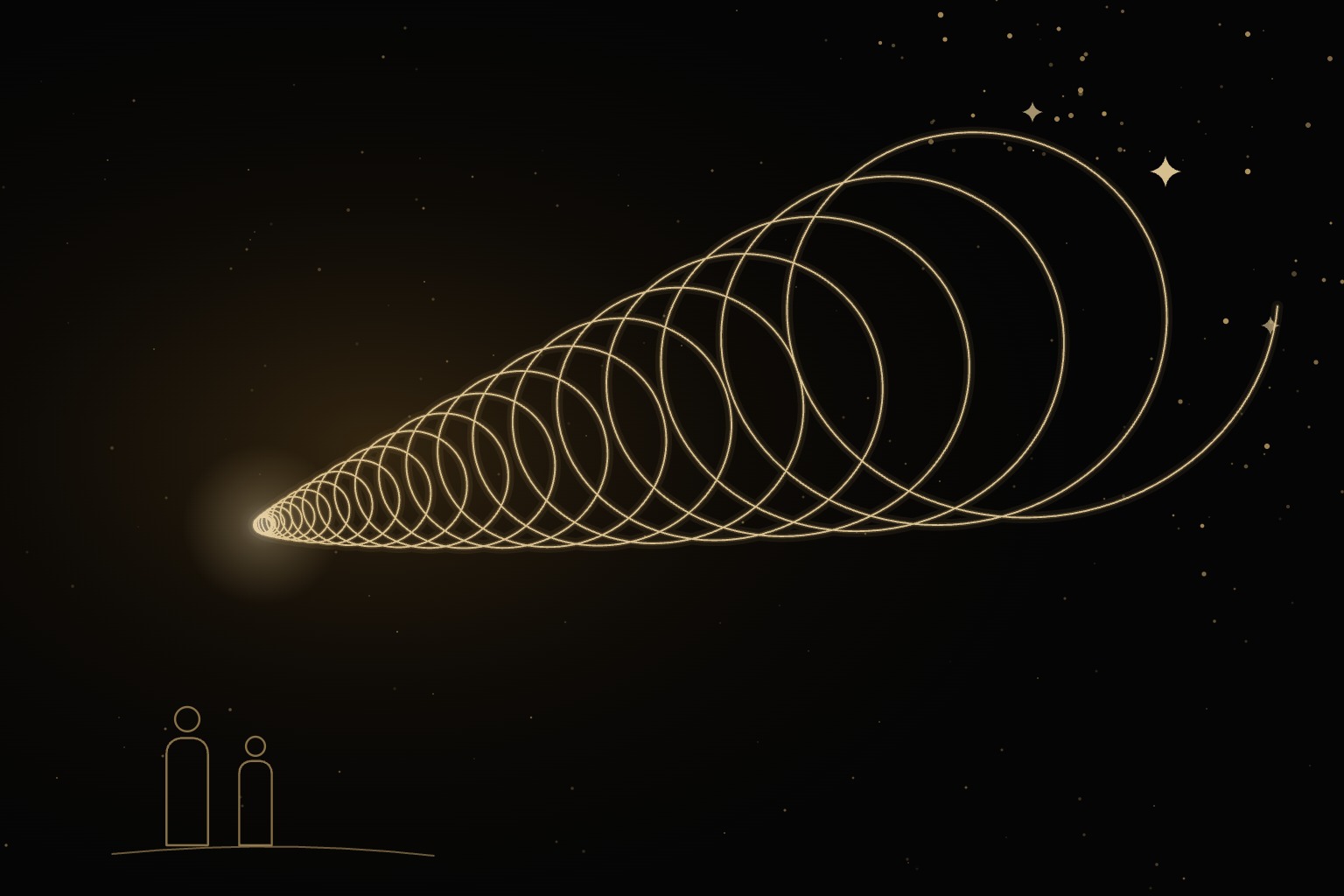
So constellation work does not try to make grief go away. That would be the wrong ambition entirely. What it does is look at whether the grief is able to move. Healthy grief has a direction to it. It rises, it aches, it softens, it settles into something you can live alongside. Stuck grief does not move. It circles. It goes underground and comes back out sideways as exhaustion, numbness, guilt, or a strange sense that you are not really allowed to be happy.
The losses that were never mourned
Here is where systemic work sees something that individual therapy can miss. In a family system, some losses get grieved properly and some do not. A stillborn baby nobody spoke of again. A first wife who was quietly erased when the second marriage began. A brother lost in a war whose name became unmentionable. A miscarriage that everyone agreed to treat as nothing.
When a loss is excluded from a family’s story, the grief does not disappear. It waits. And very often it surfaces in someone further down the line, usually someone who never met the person at all. This is the pattern constellation facilitators see again and again, and it is why a client can arrive saying, “I am grieving far more heavily than this loss seems to warrant.”
Sometimes the honest answer is that you are carrying two griefs at once. Your own, and one that was handed to you.
What actually happens in a session
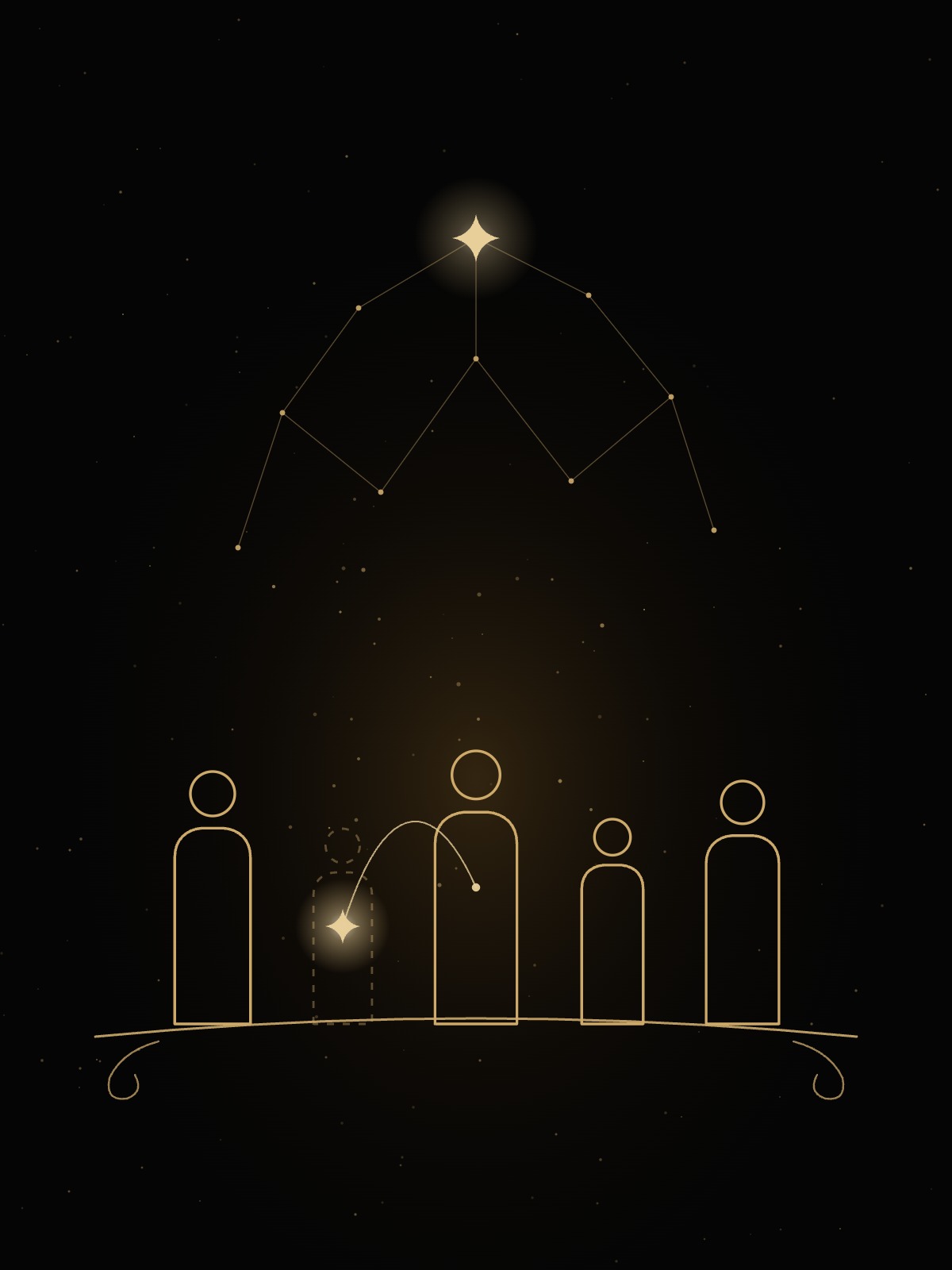
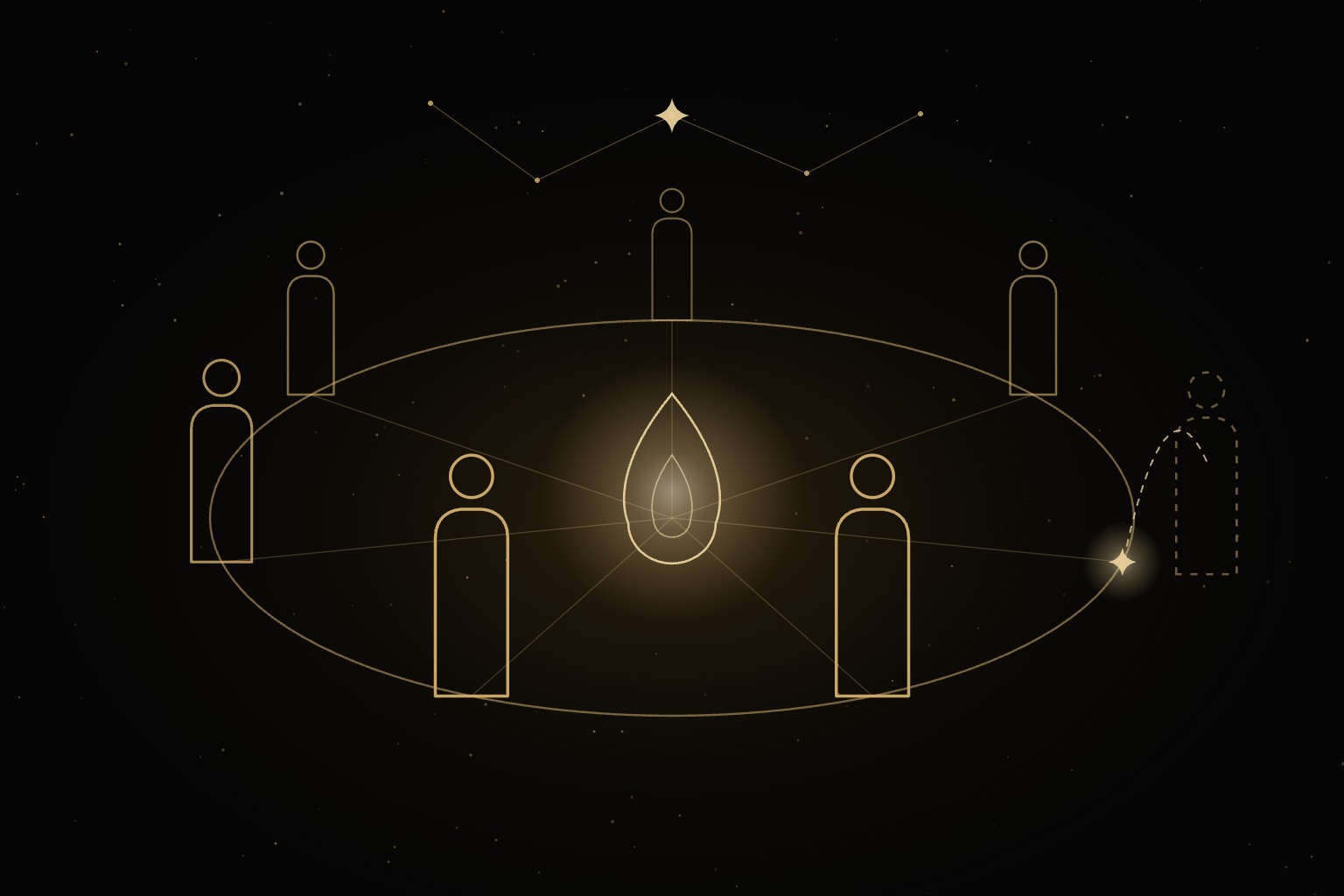
In a constellation, the person exploring the grief chooses representatives (in a group) or markers and figures (in a one to one session) for themselves, for the person who died, and sometimes for others in the system. They are then placed in relation to each other, and everyone simply notices what happens.
What tends to emerge is spatial rather than verbal. The representative for the bereaved person might be facing away, or standing far too close, or unable to look down at the floor where the person who died is lying. These are not performances. They are the body reporting something the mind has been managing around for years.
From there the work is gentle and often very slow. A sentence might be offered. “I see you.” “You are one of us.” “I will carry you in my heart, and I will live.” Sentences like these sound almost too simple written down. In the room, with the right person, at the right moment, they can land like something being set right.
Restoring the person’s place
A lot of grief work in constellations comes down to belonging. In systemic terms, everyone who was part of a family has a right to their place in it, including those who died young, those who were difficult, and those who left. When someone is pushed out of the family memory, whether out of pain or shame or simple British reticence, the system feels the gap even if nobody names it.
Giving that person their place back is often the turning point. Not a ceremony, not a performance. Just an inward acknowledgement that they existed, that they mattered, and that what happened to them was real. Clients frequently describe the aftermath as feeling less heavy rather than feeling happier, which is usually a more honest sign that something has shifted.
What the research says, and what it does not
It is worth being straight about the evidence. Constellation work is not a heavily researched field, and there is no large trial specifically on grief. There is, however, a randomised controlled trial of 208 adults published in the Journal of Counseling Psychology, which found that people who attended a three day family constellation seminar showed improved psychological functioning compared with a wait list control group, with effects still present at follow up (Weinhold et al., 2013).
That is encouraging, and it is also modest. It suggests the approach can do genuine good. It does not prove it works for every person or every kind of loss. If you are in acute, recent bereavement, or your grief comes with persistent thoughts of self harm, please speak to your GP or a bereavement service first. Constellation work sits best alongside that kind of support, not instead of it.
Is this the right time for you?
Constellation work tends to suit people who are past the rawest phase and have arrived somewhere quieter and stranger. The stage where the funeral is long over, everyone has stopped asking how you are, and you are left with something you cannot quite name. It also suits people grieving losses that never got a funeral at all: a marriage, a pregnancy, a homeland, a version of yourself.
You do not have to arrive with a clear question. Most people do not. Often the most useful starting point is simply, “There is something here I have not been able to put down.”
If that sounds familiar, you can book a one-to-one session and we can look at it together, gently and at your pace. Grief does not need to be fixed. It needs to be allowed to move.
Sorry, the comment form is closed at this time.